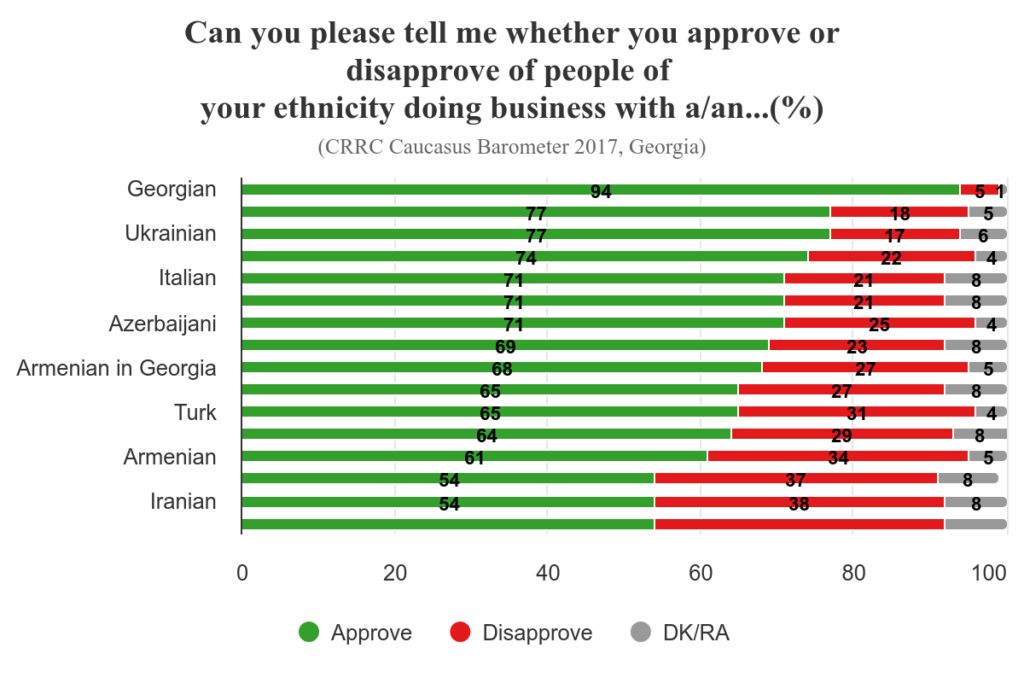
In the 2017 wave of CRRC’s Caucasus Barometer survey, 40% of the population of Georgia named Russia as the main enemy of the country. Turkey and the United States garnered the second highest share of responses with 3% each. Yet, no particular animosity…
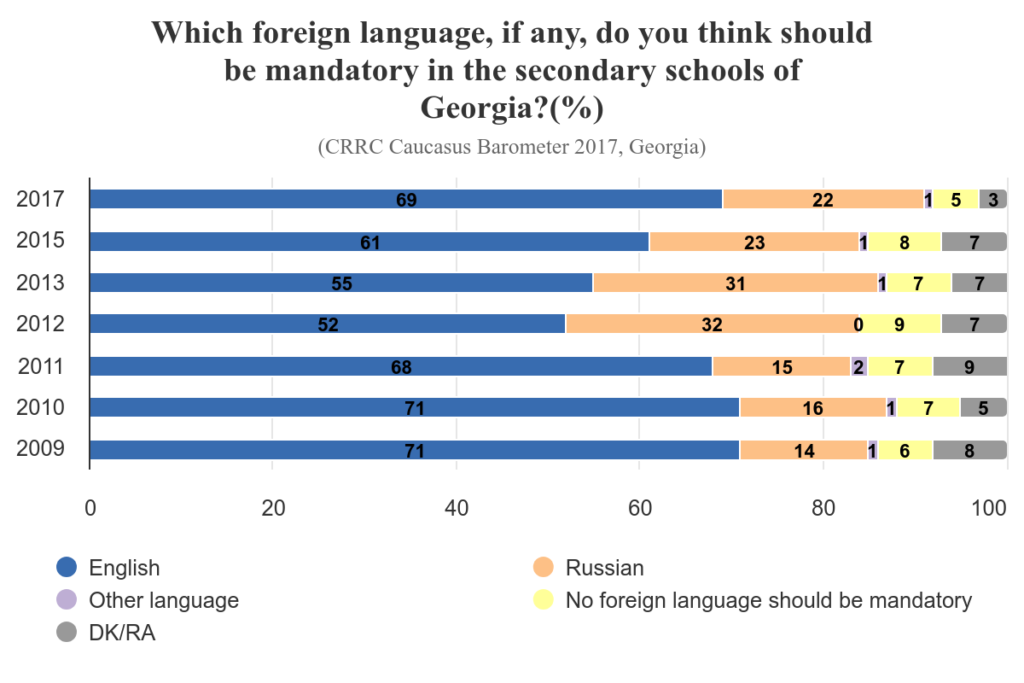
Since Georgia is a small country with a language that people outside the country rarely know, it is not surprising that people in Georgia want their children to know a foreign language. CRRC’s Caucasus Barometer (CB) survey has regularly asked…
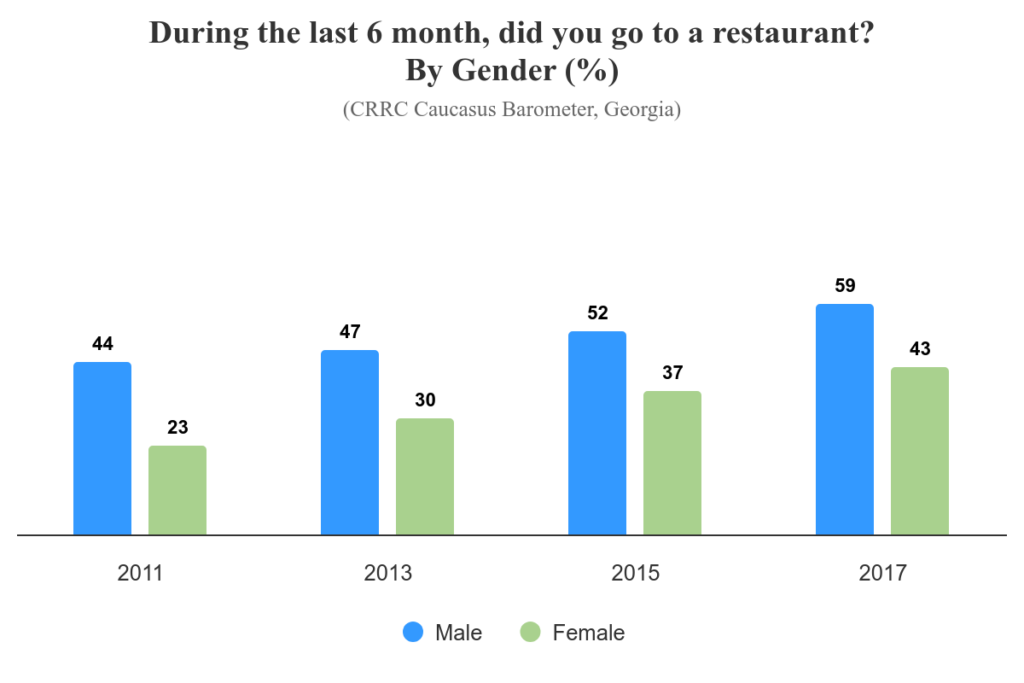
Busy restaurants and cafes are a common sight in Georgia, and CRRC’s Caucasus Barometer data suggest that restaurants and cafes have become busier over the last five years. While 27% of Georgia’s population reported going to a restaurant in 2012, five years…
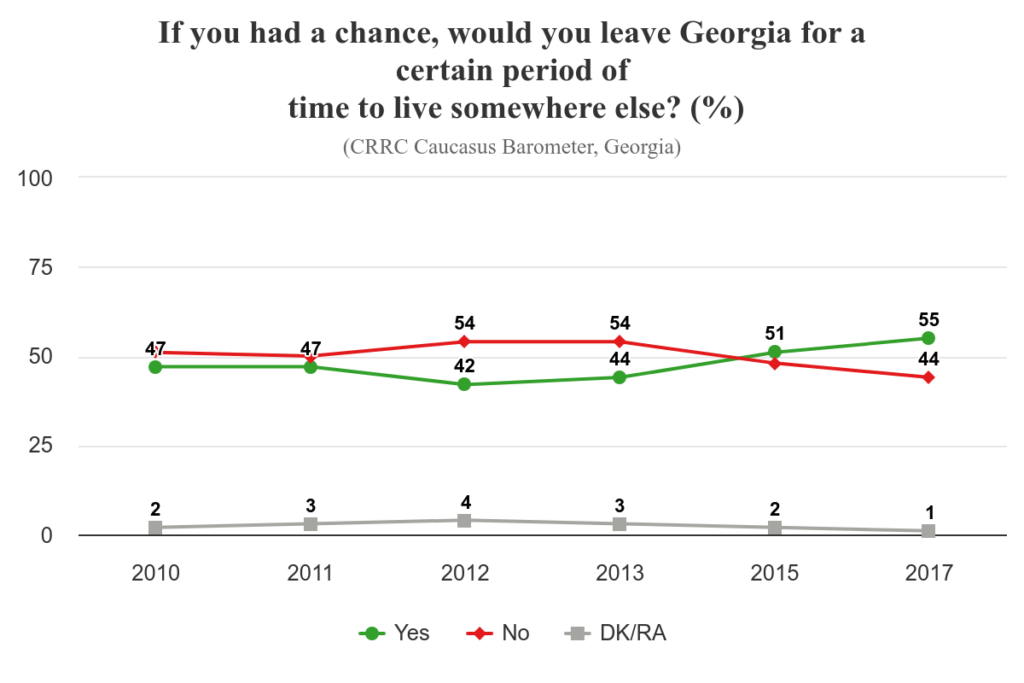
The UN estimates the number of international migrants worldwide to be on the rise. Academics and policy makers continue to pay considerable attention to drivers of international migration, i.e. the factors that cause people to move from their home country, either…
ოთხშაბათს, 21 მარტს, CRRC, ARISC და ამერიკული საბჭოები მოხარულნი არიან გამცნოთ 2018 წლის გაზაფხულის თბილისის Work-in-progress სერიების რიგით მე-4 საუბრების შესახებ! „პოსტ-ჰოკ ბლოკირება კვაზი-ექსპერიმენტული ზეგავლენის შეფასებისთვის: მაგალითი საქართველოში სოფლის მეურნეობის მხარდაჭერის პროგრამის ზემოქმედების შეფასებიდან” – დასთინ გილბრეთის, CRRC-საქართველოს კვლევითი დირექტორის მოადგილის მიერ.
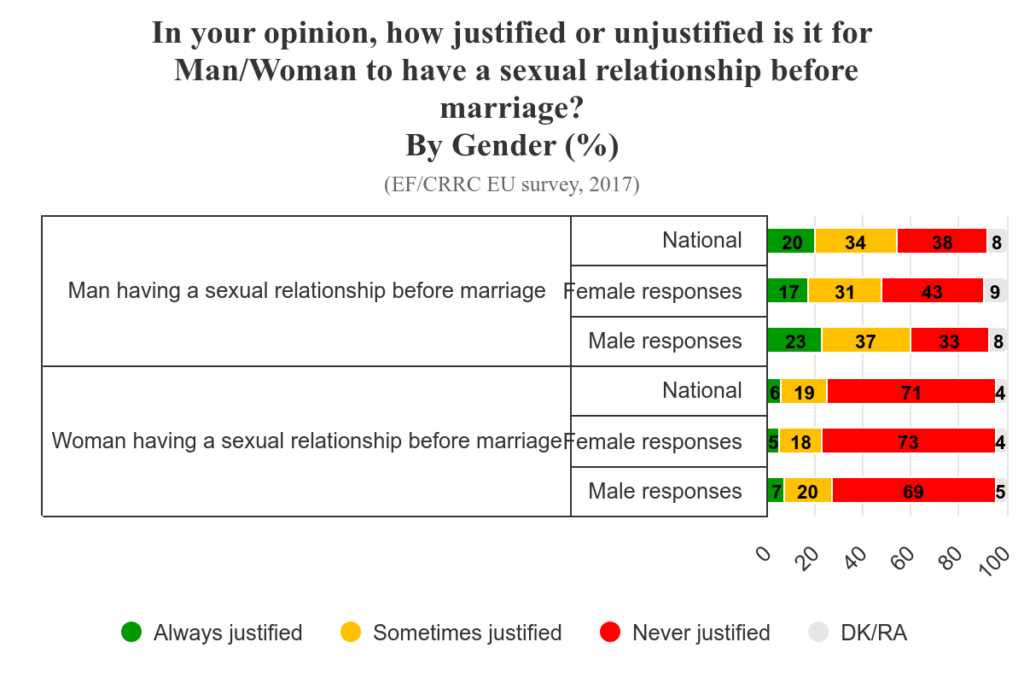
Many in Georgia embrace conservative attitudes about premarital sex, as a previous CRRC blog post highlighted. Attitudes are different, however, depending whether it’s a male or a female having the premarital relationship. This blog post uses data from CRRC’s 2017 Knowledge of…
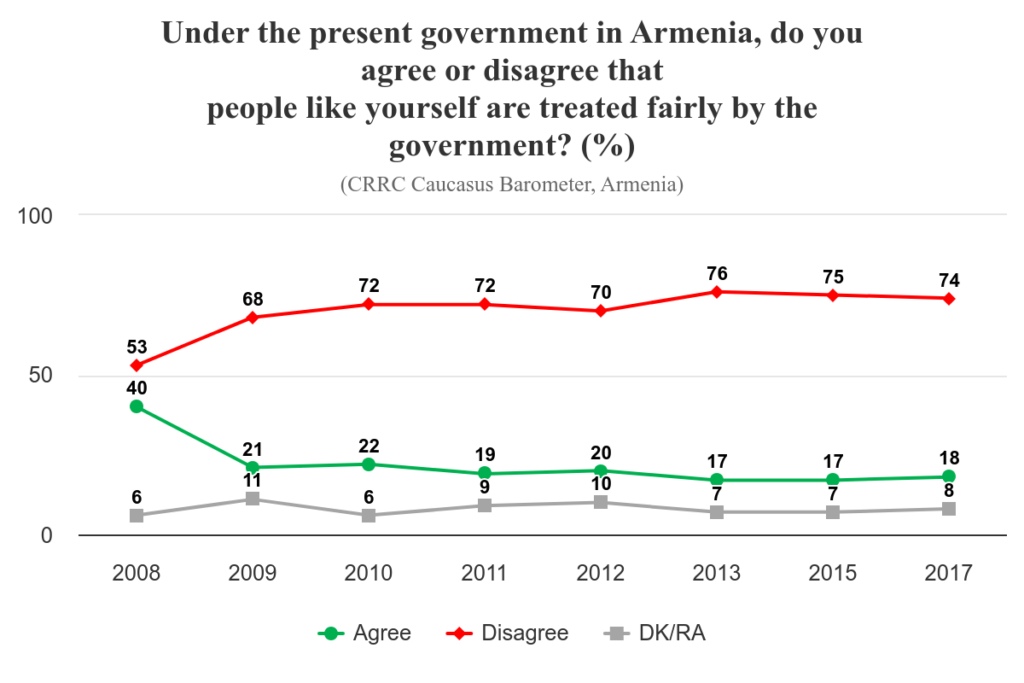
CRRC examines how data showed increasing levels of dissatisfaction with the government and increased support for protests in the run-up to Armenia’s ‘Velvet Revolution’.