Search Result

2169 results found.

Who’s thinking about temporary and permanent migrating?

The population of Georgia has declined after the dissolution of Soviet Union from 5.4 million to 3.7 million according to the latest estimates provided by the Georgian National Statistical Office. The mass emigration of the Georgian population in the 1990s has been attributed to the decline of the economy and military conflicts in the country. Even though the economic situation stabilized starting in the 2000s, the migration flow has not stopped and interest in emigration is quite widespread in Georgia. This blog shows that interest in both temporary and permanent migration is associated with age. In contrast, settlement type, ethnicity and wealth of the household is associated with interest in permanent migration but not temporary and sex, internet usage, and having a relative living abroad with temporary but not permanent migration.
The population of Georgia has declined after the dissolution of Soviet Union from...

Call for poster presentations at CRRC’s 6th Annual Conference

Under the auspices of its annual conference, CRRC is sponsoring a poster presentation session for advanced masters and doctoral students. Posters are simple but accessible way of presenting your research to a wider audience. They allow quick yet powerful dissemination opportunities for your research, and get you an immediate feedback from the participants. 

Under the auspices of its annual conference, CRRC is sponsoring a poster presentation session for...
Grit in Georgia
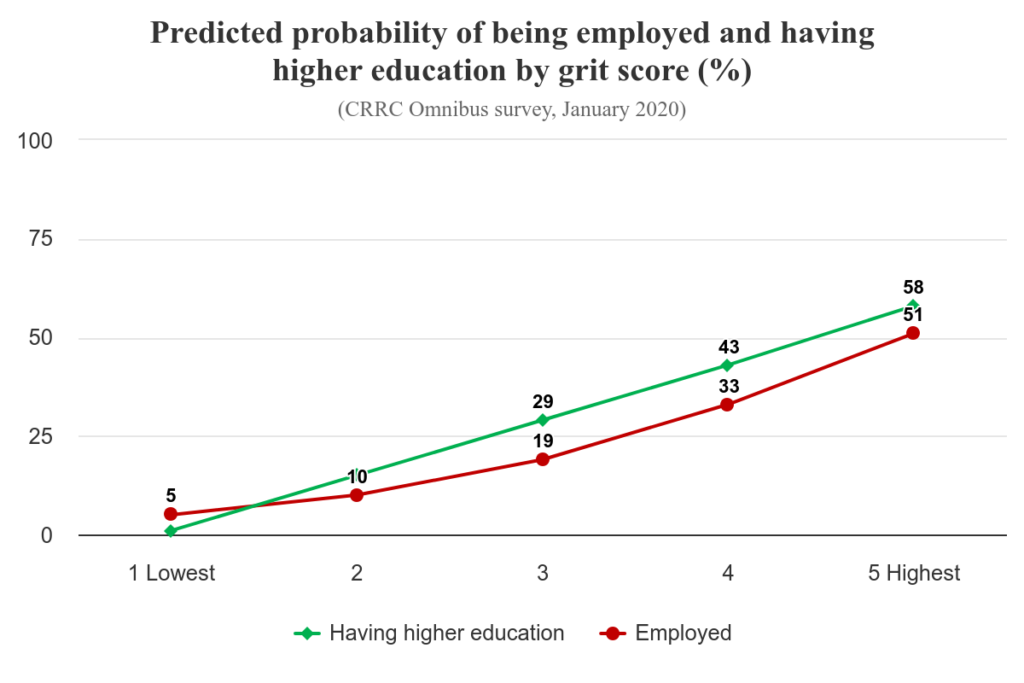
Grit, the idea that passion and perseverance are important determinants of success aside from intelligence, has gained widespread attention in recent years. This stems from the fact that grit is a strong predictor of a number of outcomes like employment and income in life. Previous analysis on this blog suggests that the grit scale is also a strong predictor of employment in Georgia among young people in a select number of rural areas. Whether this works on a nationally representative sample is however an open question. So too is the question what predicts grit in Georgia. This blog uses data from CRRC Georgia’s January 2020 omnibus survey to address these questions.
Grit, the idea that passion and perseverance are important determinants...

Despite large drop in son preference, a third of Georgians still prefer having a boy to a girl

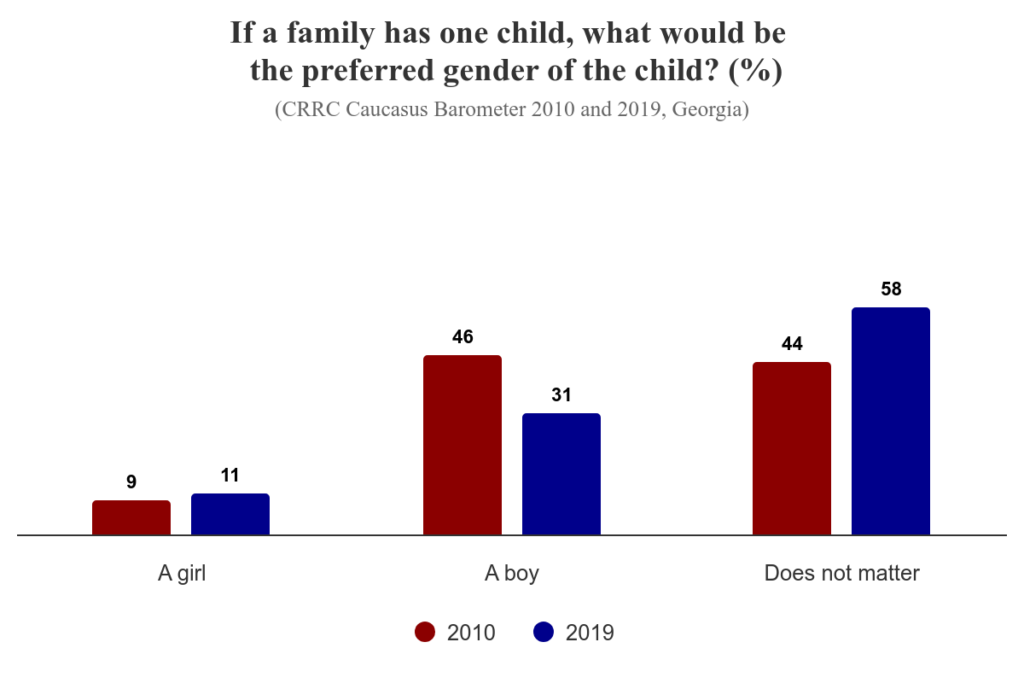
Preferences for the gender of children has a long history around the world and Georgia is no exception. CRRC-Georgia examines how attitudes have changed over the last decade.

In Georgia, having a boy has traditionally been desirable as sons are often considered the main successors in the family line, and they stay at home to take care of their parents as they age in contrast to women who traditionally move in with their husband’s family.
Preferences for the gender of children has a long history around...

Caucasus Barometer 2019 Georgia Now Available
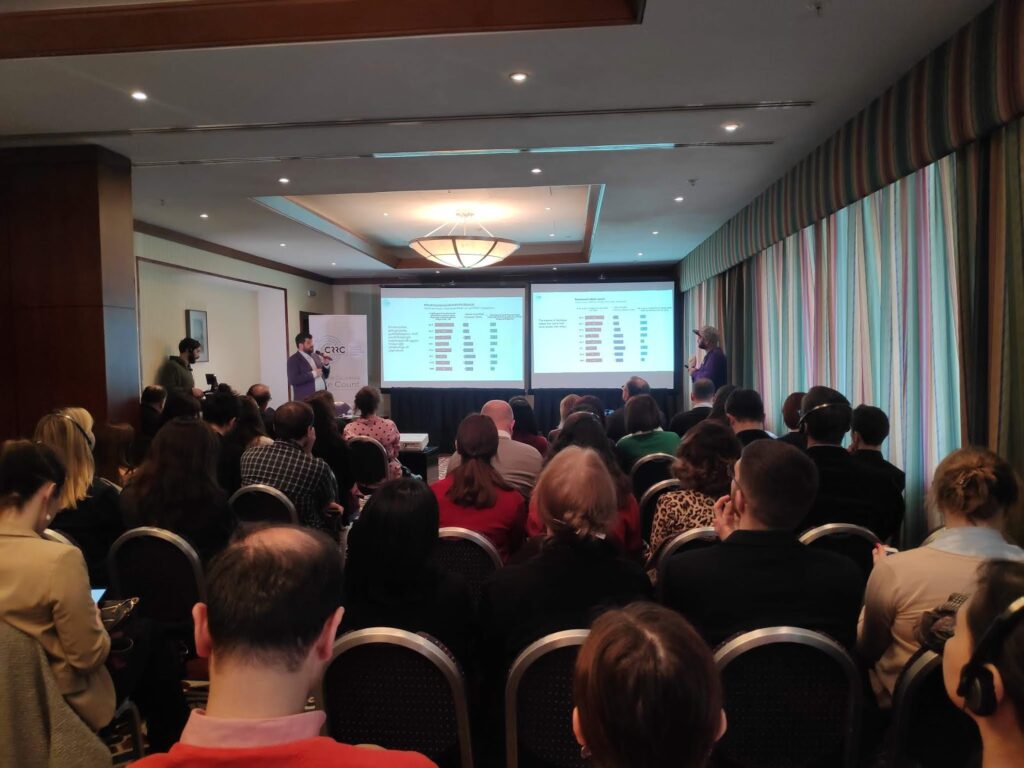
On January 30th, 2020, CRRC Georgia released the 2019 wave of Caucasus Barometer (CB) data for Georgia. CB is the longest running, publicly available household survey which enables longitudinal and comparative analysis of Armenia, Azerbaijan, and Georgia between 2008 and 2013, and for Armenia and Georgia for 2008-2019.
On January 30th, 2020, CRRC Georgia released the 2019 wave of Caucasus Barometer (CB) data...

In a sea of pessimism, who is optimistic about Georgia?
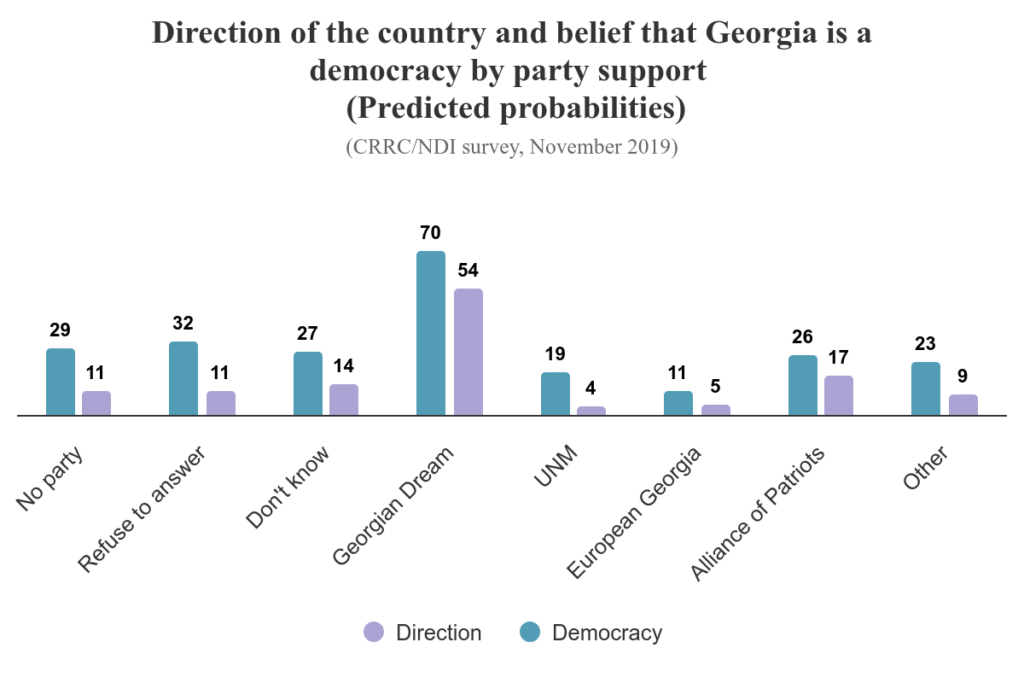
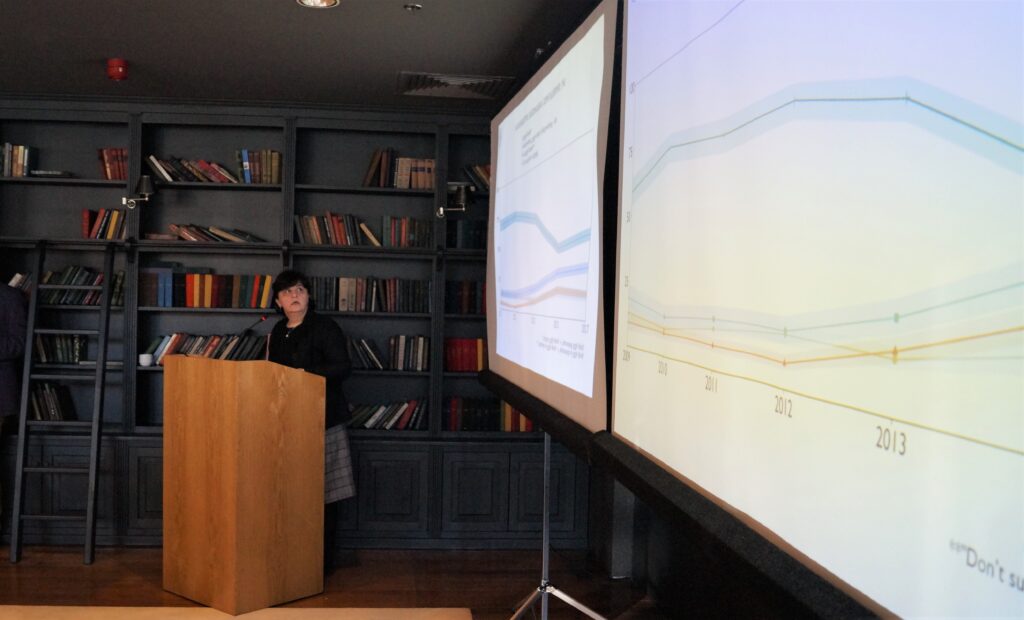
The CRRC and NDI survey released two weeks ago showed a pessimistic picture – half the public thinks Georgia is going in the wrong direction, 24% that nothing is changing, and only 19% think it is going in the right direction. A majority (59%) think the country is not a democracy for the first time since the question was asked on the survey in 2010. Moreover, performance assessments of government, parliament, the courts, and most ministries declined.
The CRRC and NDI survey released two weeks ago showed a...

The economic and educational consequences of child marriage in Georgia
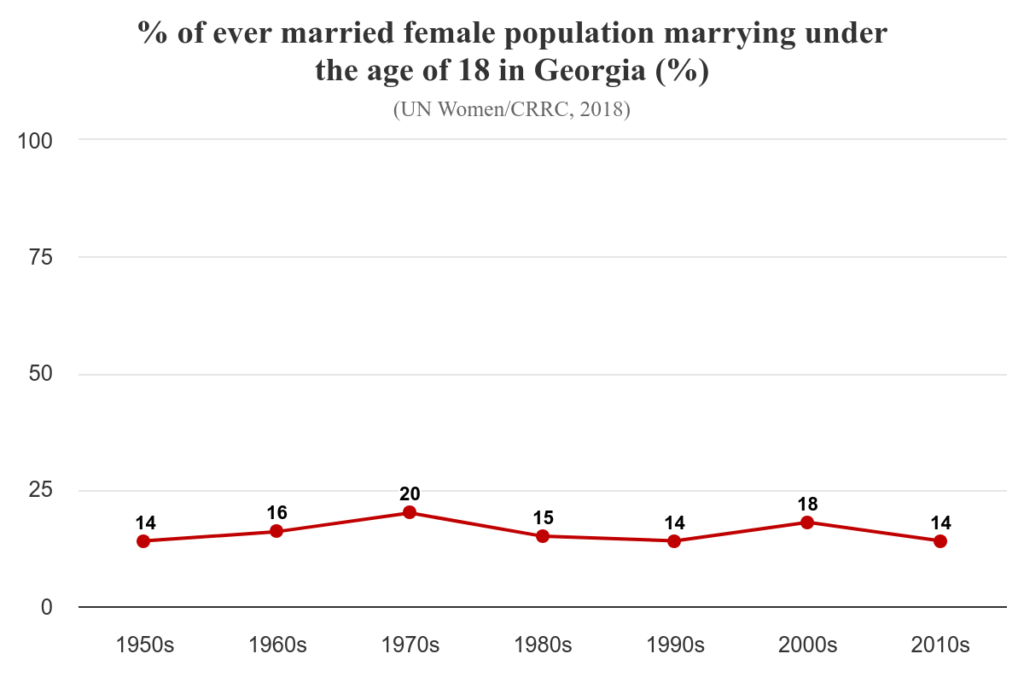
Widely condemned as a violation of human rights, child marriage is associated with negative health outcomes — both physical and psychological. Aside from these clear issues, a growing body of research suggests child marriage also has economic consequences for both the women who marry under the age of 18 and society at large.
Widely condemned as a violation of human rights, child marriage is associated with negative health...

The 6th Annual CRRC Conference | June 26-27, Tbilisi, Georgia

Call for proposals: The 6th Annual CRRC Conference "Coming together and growing apart: A decade of transformation in the South Caucasus"

Place and date: June 26-27, Tbilisi, Georgia

The Caucasus Research Resource Centers (CRRC) seek proposals for the 6th Annual CRRC Conference, and welcomes proposals for (a) thematic panels and (b) methodological seminars. For our thematic panels, we invite panel and paper proposals investigating the deep sociopolitical, cultural, and economic changes occurring in the South Caucasus through a comparative, empirical lens. We welcome quality scholarly contributions from emerging and established academics exploring the following broad themes: Conflicts, displacement, and reconciliation; Culture, values, and identity; Economic development, energy, and mobility; Politics, power, and democracy; Urban development and environmental issues; Civil society and activism.

Call for proposals: The 6th Annual CRRC Conference "Coming together and growing apart: A decade...