Search Result

2155 results found.

The economic and educational consequences of child marriage in Georgia

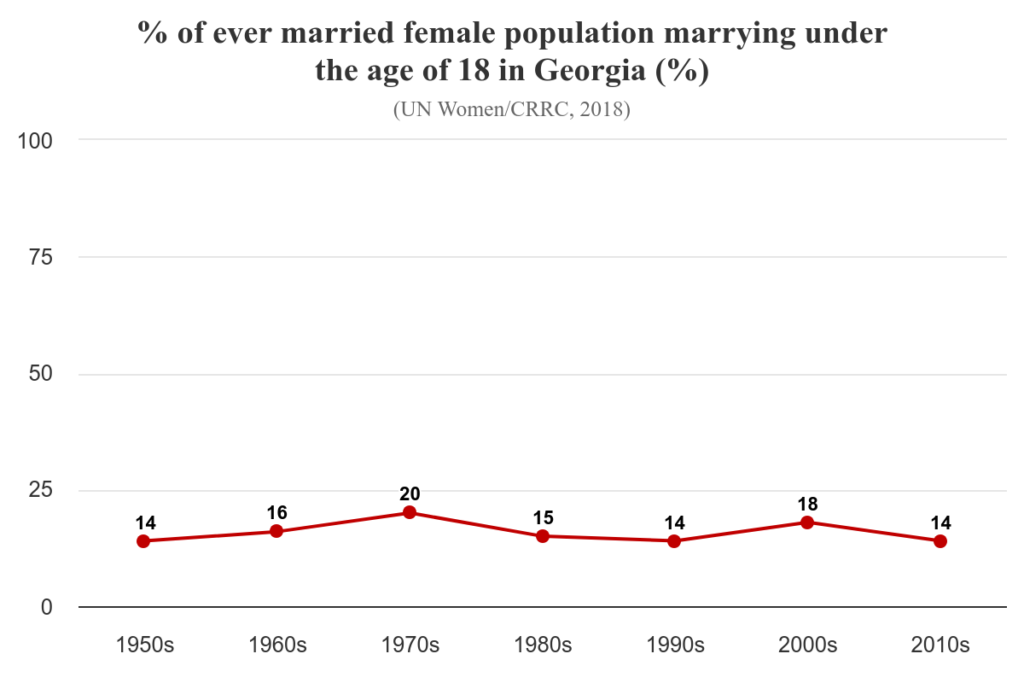
Widely condemned as a violation of human rights, child marriage is associated with negative health outcomes — both physical and psychological. Aside from these clear issues, a growing body of research suggests child marriage also has economic consequences for both the women who marry under the age of 18 and society at large.
Widely condemned as a violation of human rights, child marriage is associated with negative health...
The 6th Annual CRRC Conference | June 26-27, Tbilisi, Georgia

Call for proposals: The 6th Annual CRRC Conference "Coming together and growing apart: A decade of transformation in the South Caucasus"

Place and date: June 26-27, Tbilisi, Georgia

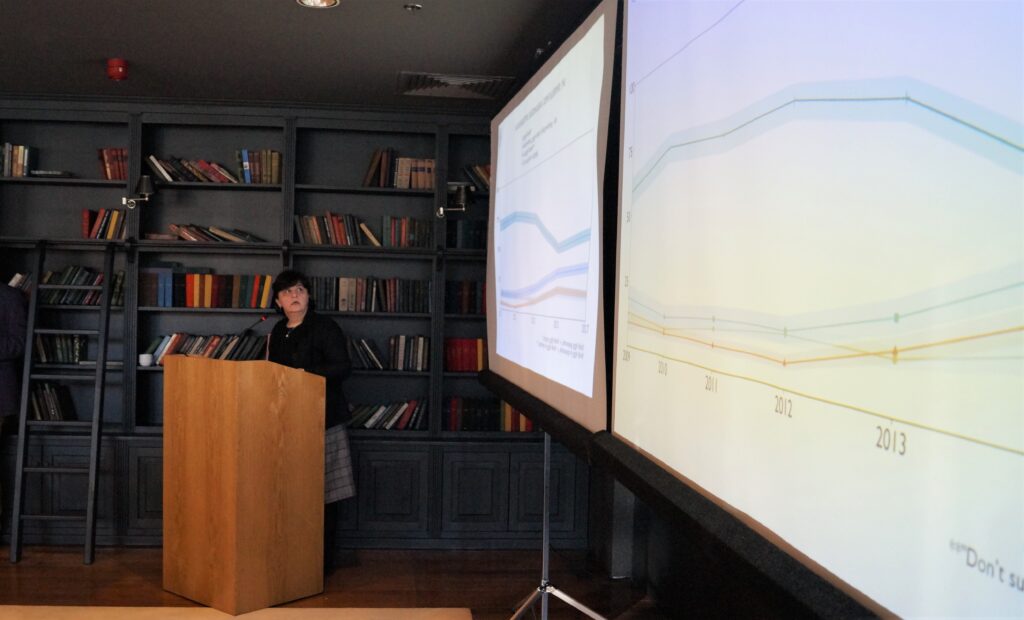
The Caucasus Research Resource Centers (CRRC) seek proposals for the 6th Annual CRRC Conference, and welcomes proposals for (a) thematic panels and (b) methodological seminars. For our thematic panels, we invite panel and paper proposals investigating the deep sociopolitical, cultural, and economic changes occurring in the South Caucasus through a comparative, empirical lens. We welcome quality scholarly contributions from emerging and established academics exploring the following broad themes: Conflicts, displacement, and reconciliation; Culture, values, and identity; Economic development, energy, and mobility; Politics, power, and democracy; Urban development and environmental issues; Civil society and activism.

Call for proposals: The 6th Annual CRRC Conference "Coming together and growing apart: A decade...

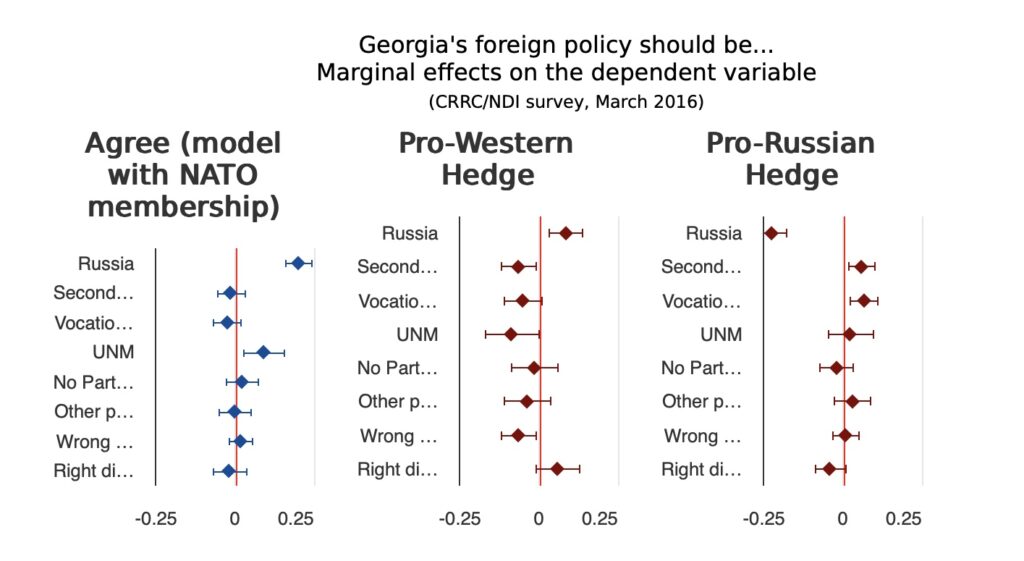
Georgia’s Foreign Policy Trilemma: Balance, Bandwagon, or Hedge? Part 2

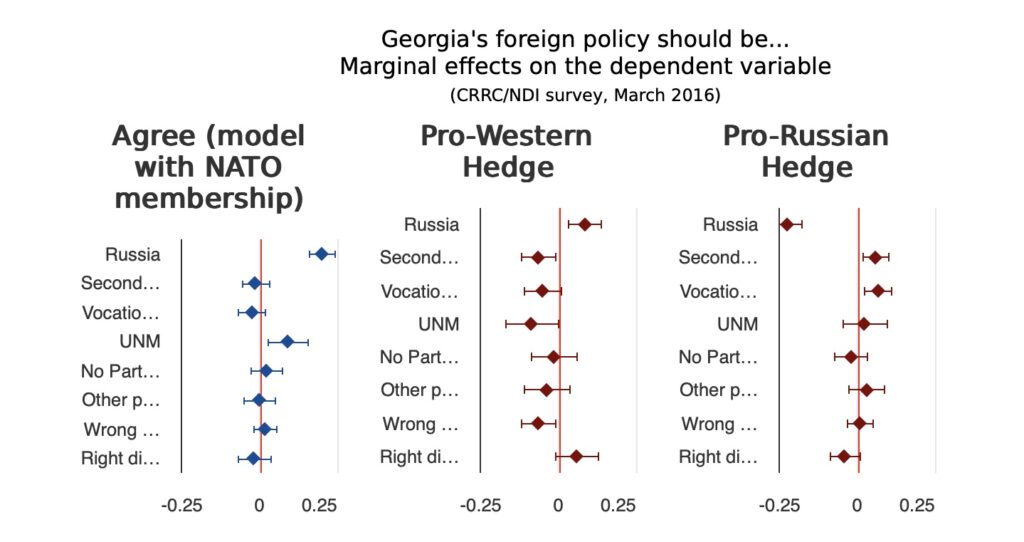
The first part of this blog post discussed evidence of an association between perceiving Russia as the main threat to Georgia and a preference for a foreign policy that balances against that threat through alliances with the West. The relationship between threat perception and hedging, defined as attempting to maintain good relations with both Russia and the West, is less clear.
The first part of this blog post discussed evidence of an association between perceiving Russia...

Georgia’s Foreign Policy Trilemma: Balance, Bandwagon, or Hedge? Part 1

Georgia is a small, partly free democracy in a tough neighbourhood, and NATO membership remains an unfulfilled promise. While Russia is widely perceived as the main threat to Georgia’s security, the appropriate strategic or political response to the threat is not obvious. What options does Georgia have when faced with a powerful rival on its border, and what public support is there for these options?
Georgia is a small, partly free democracy in a tough neighbourhood, and...

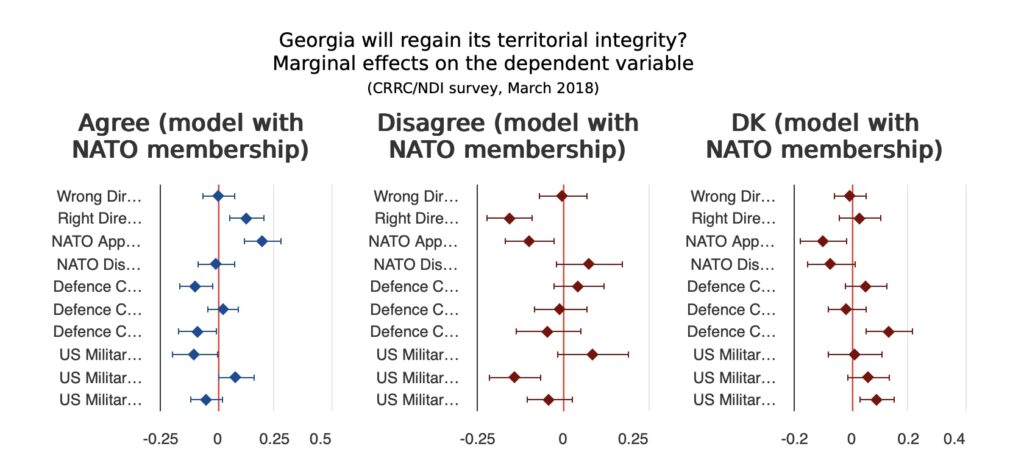
Who believes Georgia will regain its territorial integrity?

Territorial integrity is frequently cited by Georgians as one of the most important national issues, but the relative salience of Georgia’s territorial conflicts has declined since the 2008 Georgian-Russian war. Evidence from the 2013 Caucasus Barometer suggests that there is a high level of uncertainty about when or if the conflicts will be resolved and that there is little public support for any type of settlement involving less than the full restoration of Georgia’s territorial integrity (such as high levels of autonomy for Abkhazia or a confederation state).
Territorial integrity is frequently cited by Georgians as one of...

Perceptions of healthcare quality in Georgia

Affordable healthcare remains one of the main national issues for people in Georgia: 18% of people considered it one of the most important issues in the July 2019 CRRC and NDI survey. The salience of this issue was at its highest in 2012 (35%), and has decreased over the years, particularly in light of the passage of the universal health insurance program. Nonetheless, affordable healthcare remains one of the most important issues for the public and particularly the cost of medicine, which is one of the three largest costs for over a third of families in Georgia. In this regard, it is unsurprising that over half of the population name the cost of medicine or the cost of care/doctor visits as the largest ones facing the healthcare system in Georgia. The second most common issue, which 24% of respondents named on the question about issues in the healthcare system, was a concern over the lack of professionalism of doctors and medical personnel, something associated with the quality of care.
Affordable healthcare remains one of the main national issues for people in Georgia: <a...

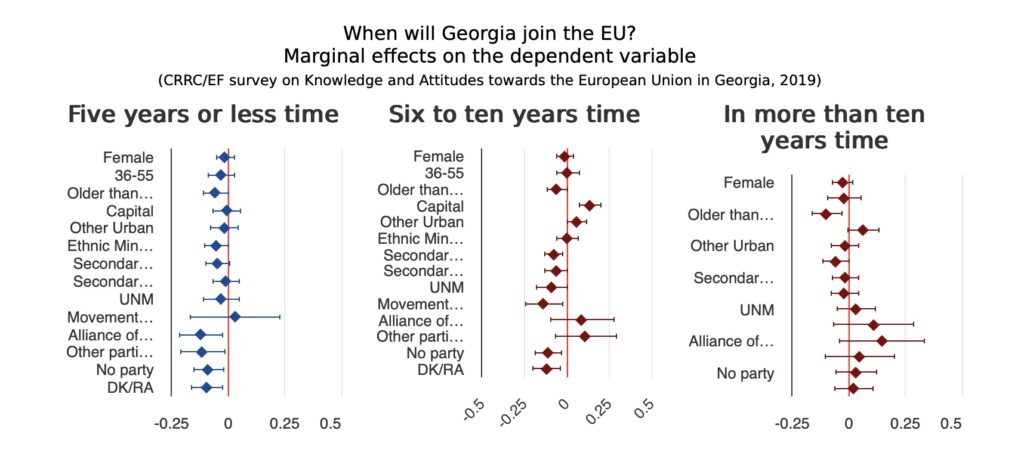
Optimism Regarding EU membership is decreasing

Georgia is not a candidate for membership in the European Union (EU), but the government has the stated goal of joining the EU when the country is ready for it. According to the Knowledge of and Attitudes towards the EU in Georgia survey (EU Survey) CRRC-Georgia conducted in spring 2019 for Europe Foundation, 71% of the population of Georgia would vote for EU membership if a referendum were held tomorrow. Only 10% would vote against it and 7% would not vote at all. While support for joining the EU is clearly high, people are increasingly pessimistic about how long it will take Georgia to join.
Georgia is not a candidate for membership in the European Union (EU), but the government...

Attitudes towards the new banking regulations

The share of the public with loans from formal financial institutions doubled from 2011 to 2016 according to World Bank Group’s analysis based on Integrated Household Survey in Georgia. The July 2019 CRRC/NDI survey data suggests that about half of the population has a loan. To address perceived over-indebtedness, on 1 January, 2019 the National Bank of Georgia introduced new regulations, restricting lending without more extensive analysis of a consumer’s solvency. The analysis includes looking at an individual’s income, expenses and total obligations, and determination of debtors’ capacity to service their loans without significant financial difficulties.
The share of the public with loans from formal financial institutions doubled from 2011 to...