Search Result

2155 results found.

The most important issues facing Georgia, prior to the COVID-19 outbreak

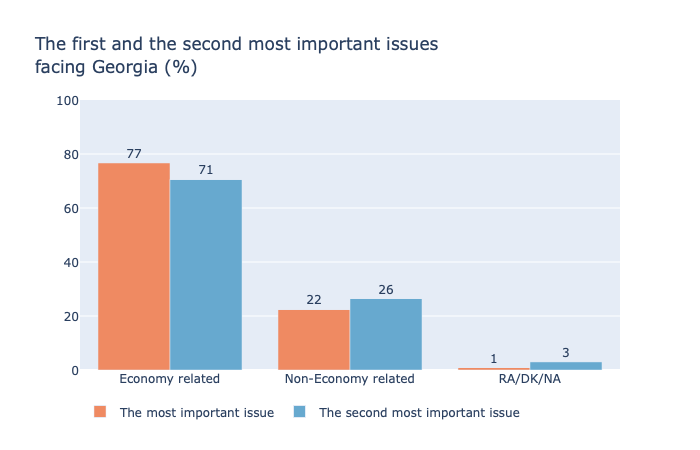
What did Georgians think was the most important issue facing the country prior to the COVID-19 outbreak? The economy. The current COVID-19 outbreak will shift perceptions surely. Yet, the measures to fight the virus have slowed down the economy, exacerbating the previously existing economic issues. While the economy has consistently been the most important issue for most Georgians in recent years, this headline figure hides some nuance. This blog explores this nuance, looking at who names a mixture of economic and non-economic issues as the most important ones facing the country.
 
What did Georgians think was the most important issue facing the country prior to the...

Coming Together and Growing Apart: A Decade of Transformation in the South Caucasus – The 6th CRRC Methods Conference 2020
The last decade has seen broad political, economic, and social changes across the South Caucasus. In the previous ten years, events including Armenia’s 2018 ‘Velvet Revolution,’ the 2016 ‘Four-Day War’ in Nagorno-Karabakh, the region’s first ballot box-driven change in government in the 2012 Georgian parliamentary elections, the devaluation of the national currency in Azerbaijan, and volatility in relations between the European Union and Russia have reshaped the region. Such events have raised questions as to whether the three nations of the South Caucasus are growing increasingly apart, and if so, whether these changes reflect substantial divergence among societies or if they are simply an outcome of the interests of national elites.
The last decade has seen broad political, economic, and social changes across the South Caucasus....

Coming Together and Growing Apart: A Decade of Transformation in the South Caucasus

CRRC is excited to announce its 6th Methods Conference, which will be held on June 26-27 and open to public viewing over Facebook and direct participation through signing up here. The conference focuses on a decade of change in the region.
CRRC is excited to announce its 6th Methods Conference, which will be held on June...

Attitudes towards policing and the judiciary in Georgia
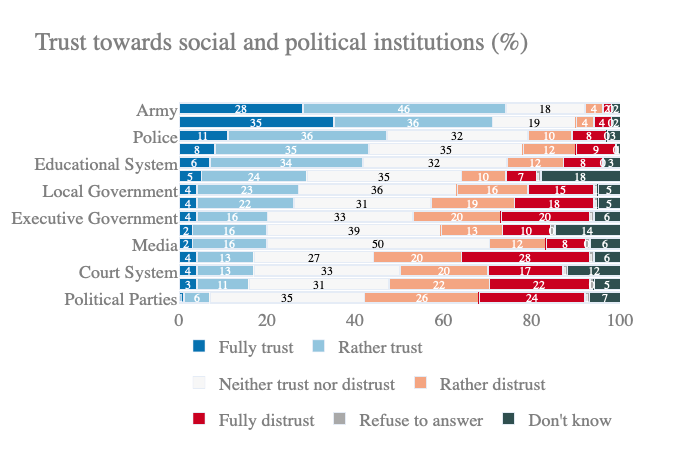
The world has seen large protests in response to the police murder of George Floyd, including in Tbilisi. Although Georgia underwent significant police reform following the Rose Revolution, the country’s harsh criminal justice policies were also criticized under the UNM, with police killings and the country attaining the ignoble distinction of having the fourth highest prison population per capita in the world. The Georgian Dream government also undertook a number of criminal justice reforms. Still, GD too have implemented controversial policing policies and had numerous scandals. Police murders remain an issue, police drove a boy to suicide in 2019 (and 2016), and for a time police in Tbilisi were implementing a policy resembling New York’s stop and frisk (notably, the UNM also attempted to do so). The police raid of the Bassiani night club and police violence in dispersing protesters in June 2019 were also widely condemned. Clearly, Georgia continues to face challenges with rule of law and law enforcement, ranging from misuse of power in criminal cases to general policing policy and crowd control during protests. But what does the public think?
 
The world has seen large protests in response to the police...

Coming Together and Growing Apart: A Decade of Transformation in the South Caucasus, June 26-27, 2020

On June 26-27, 2020, CRRC is organizing the Sixth CRRC Methods Conference, this time virtually. 

The two-day virtual conference seeks to answer if broad political, economic, and social changes across the South Caucasus have braught the three nations of the South Caucasus together or drawn them apart.

Five thematic panels and two roundtable sessions will unpack questions posed in this year’s conference theme. The Sixth CRRC Methods Conference will feature two keynote speeches, from Professor John O’Loughlin (University of Colorado Boulder) and Professor Julie A. George (The Graduate Center, City University of New York). Furthermore, CRRC offices will celebrate the release of another wave of the Caucasus Barometer survey.
 

On June 26-27, 2020, CRRC is organizing the Sixth CRRC Methods Conference, this time virtually. <br...

Lost in the census: Mingrelian and Svan languages face extinction in Georgia
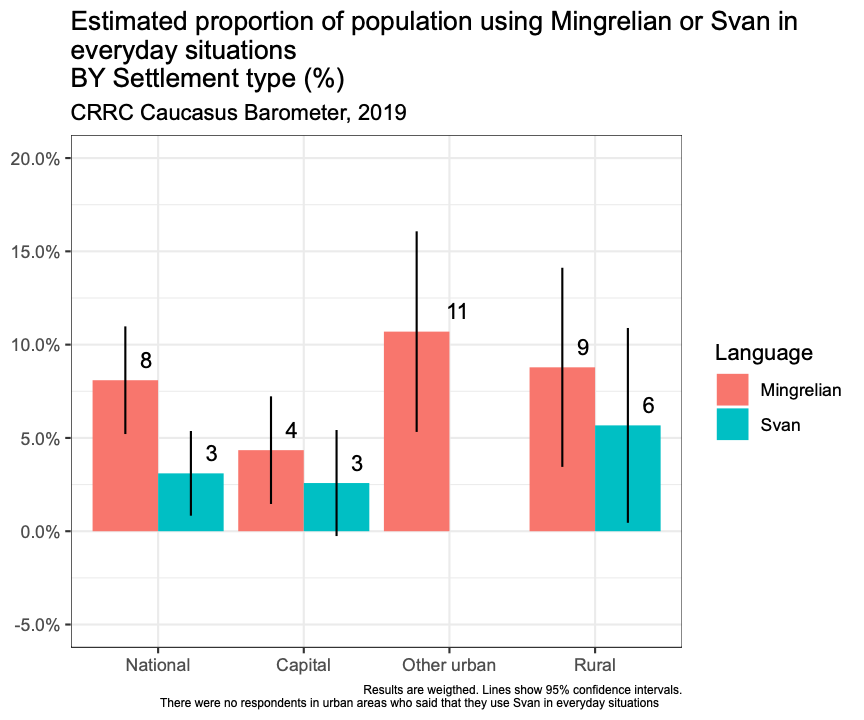
On 21 February, Georgia celebrates International Mother Tongue Day, a day established by UNESCO to promote ‘linguistic and cultural diversity and multilingualism’.
 
Georgia is home to at least 11 languages on the brink of extinction, according to UNESCO. The Ministry of Education now offers classes to ethnic minority students in several small languages. 
 
This suggests that the state recognises the need to preserve smaller tongues, although, what languages need to be protected seems to be selective.
On 21 February, Georgia celebrates International Mother Tongue Day, a day established by UNESCO to...

Are Lion’s Whelps Equally Lions?!

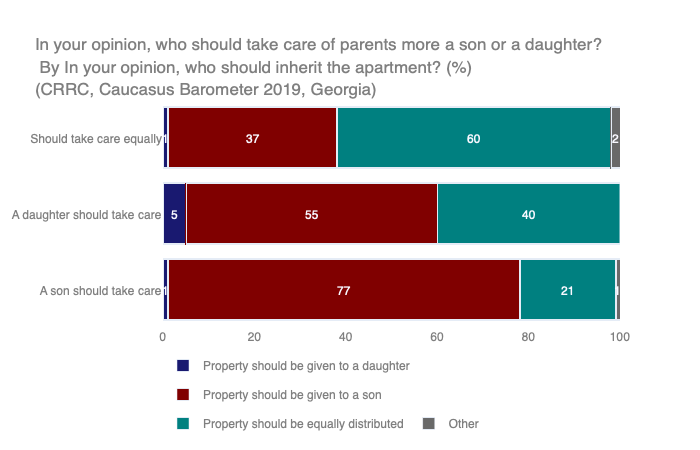
In Georgia, tradition has it that a son stays in the family and is responsible for taking care of his parents in their old age. Consequently, tradition also gives parents’ property to their sons. This limits women’s access to economic resources. New data from Caucasus Barometer shows that regardless of whether people think that a son or daughter or both equally should take care of their parents in their old age, many believe the son should still get the inheritance.
In Georgia, tradition has it that a son stays in the family and is responsible...

Why are Georgians nostalgic about the USSR? Part 2

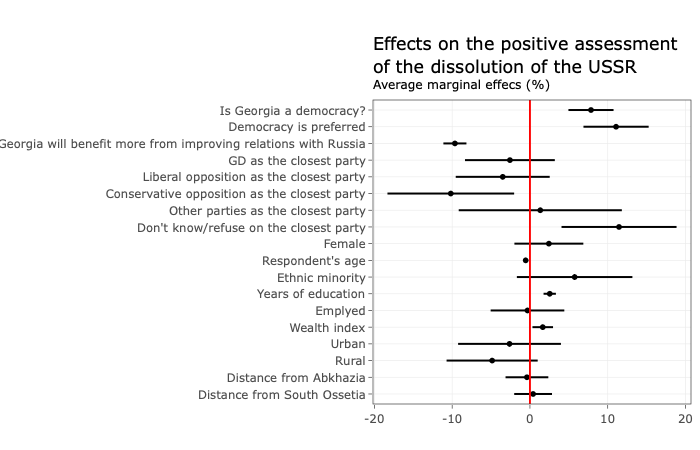
Georgians are equally split in their evaluations of the disintegration of the Soviet Union. While younger, more educated, and wealthier Georgians are more likely to think it was a good thing, those with negative attitudes towards democracy, and those that prefer Russia over the West have more negative feelings. Although respondents named multiple factors to explain their dissatisfaction, these categories can be broken into broader constructs such as economic disarray and the political turmoil occurring after the collapse. This post further explores factors associated with positive attitudes towards the dissolution of the Soviet Union.
Georgians are equally split in their evaluations of the disintegration of the Soviet Union. While...