Search Result
2155 results found.

Taking stock of change: The South Caucasus after a turbulent year – The 7th Annual CRRC Conference 2021
The South Caucasus experienced a tumultuous 2020. The global COVID-19 pandemic and renewed hostilities in Nagorno-Karabakh have reshaped the region. As the South Caucasus countries struggle to cope with the consequences of the pandemic, questions arise whether institutional responses to challenges are sufficient, and the limits on various freedoms that were introduced to curb the spread of the virus are being manipulated for politics. The 2020 Nagorno-Karabakh War has fundamentally altered the political geographies of the South Caucasus. As the West and international organizations were largely absent during the conflict, the traditional regional powers, Russia and Turkey, emerged as powerbrokers. While the war is often discussed through the lens of greater geopolitical realignments, researchers need to address what it means to individuals and communities who are often omitted from such analyses.
The South Caucasus experienced a tumultuous 2020. The global COVID-19 pandemic and renewed hostilities in...
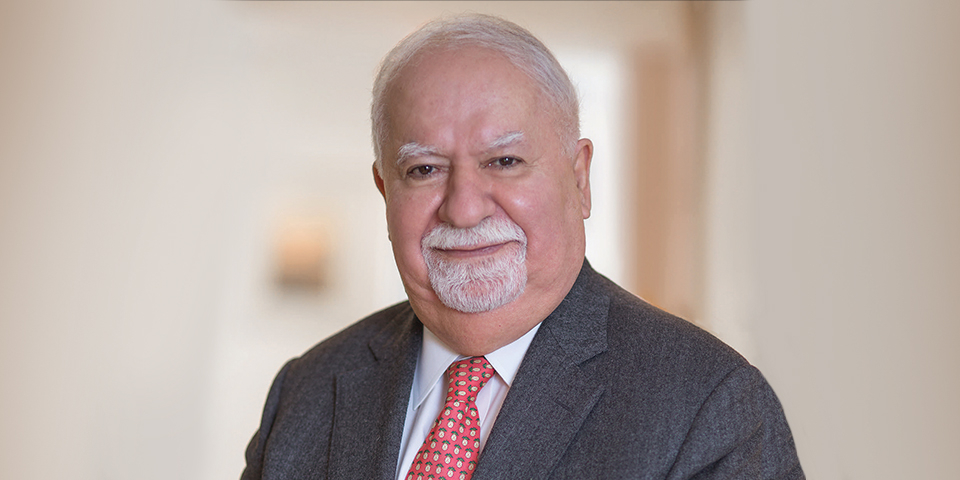
CRRCs mourn the death of Vartan Gregorian, President of Carnegie Corporation of New York
The initial idea for the Caucasus Research Resource Centers (CRRCs) was conceived by Vartan Gregorian, President of Carnegie Corporation of New York. Vartan Gregorian's vision was to establish a network of institutions to engage and support academic and expert communities at a time of need following the collapse of the Soviet Union... We note our deep appreciation to Vartan Gregorian, who passed away on April 15, 2021, for his vision, generosity, and crucial role in creating the CRRCs.
The initial idea for the Caucasus Research Resource Centers (CRRCs) was conceived by Vartan Gregorian,...
Report | Workplace Sexual Harassment in the Civil Service in Georgia
The study aimed at generating evidence to inform policies on preventing and responding to workplace sexual harassment in Georgia’s civil service.
The study aimed at generating evidence to inform policies on preventing and responding to workplace...
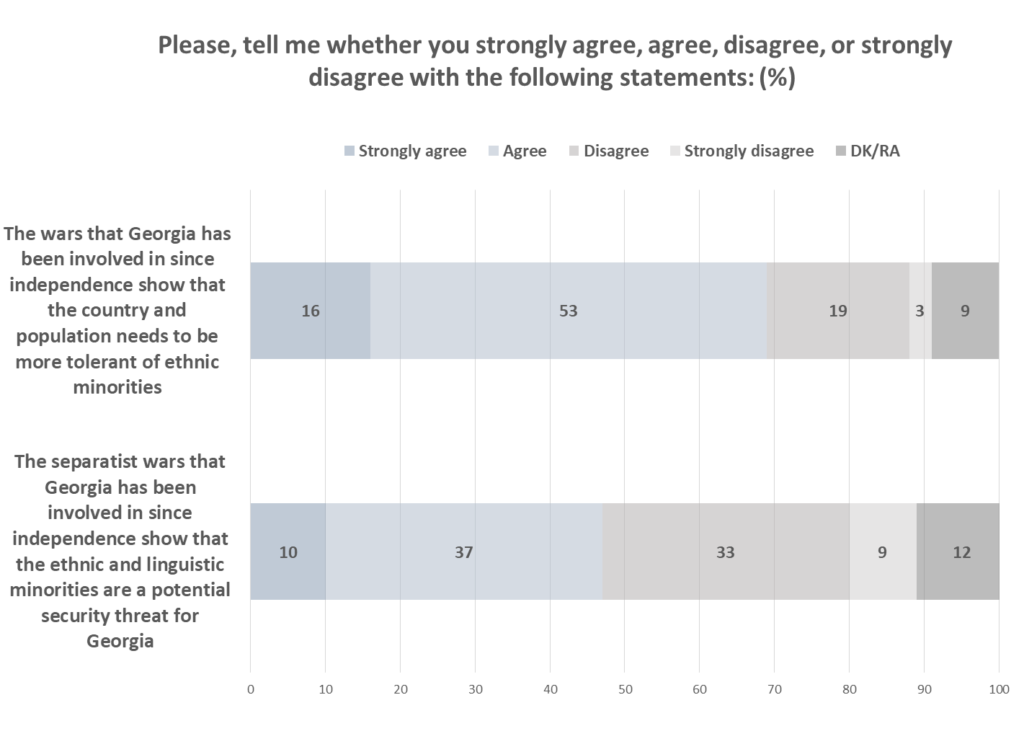
Past wars have taught Georgians both to fear and be tolerant of minorities
Since the beginning of the 1990s, Georgia has gone through a number of ethnic conflicts that have not been resolved to this day. Given that Georgia has always been a multi-ethnic country, and the traumatic experience of unresolved conflicts, attitudes towards ethnic minorities matter. Recently released data from the Future of Georgia Survey looks at links between Georgia’s conflicts and the Georgian public’s attitudes towards ethnic minorities.
The data suggests that although the wars have led many in Georgia to see a potential threat of ethnic minorities to the country’s security, people are also conscious of the need for tolerance.
Since the beginning of the 1990s, Georgia has gone through a number of ethnic conflicts...
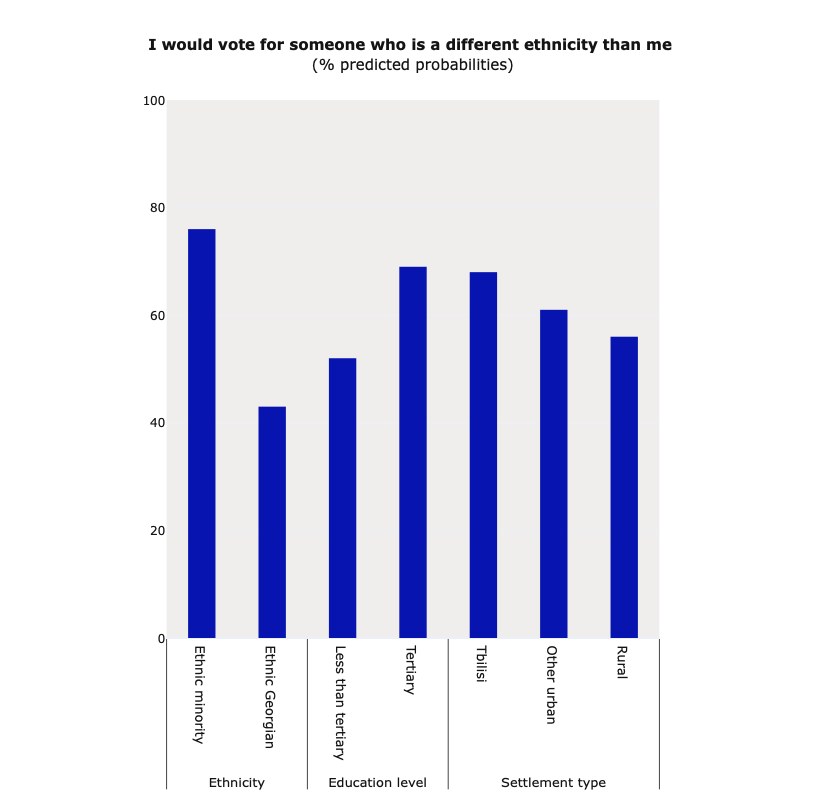
Do Georgians harbour Ethnonationalist sentiments?
The social and political integration of ethnic minorities remains a challenge for the long-term democratic development of Georgia. But could ethnonationalist sentiments be hindering such integration?
Considering that one in seven Georgian citizens is of non-Georgian ethnic descent, ethnonationalism has the potential to estrange significant sections of society, presenting barriers to social cohesion and stability.
Although the failure to address this problem can be partially attributed to government and political institutions, the public’s attitudes and beliefs also likely serve as an impediment.
The social and political integration of ethnic minorities remains a challenge for the long-term democratic...
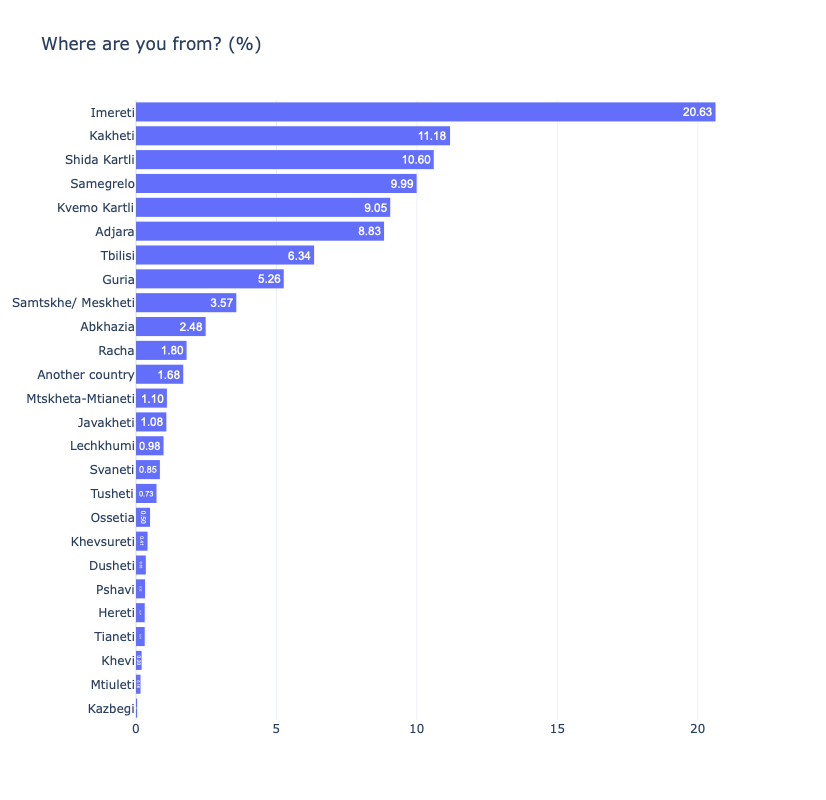
What’s a last name from Tbilisi?
While regional identities and stereotypes are a prominent part of Georgian culture, what share of people identify with each regional heritage?
Regional identities (and stereotypes) are a prominent part of Georgian culture; Rachans are ‘slow’, and Gurians ‘talk fast’. While these stereotypes are just that, one question which is very much underexplored is what share of people identify with each regional heritage.
Tbilisi is a melting pot of Georgia’s regional identities, with no clear understanding of which regional identity predominates. As one colleague regularly asks his students — ‘what’s a Tbilisian last name?’
While regional identities and stereotypes are a prominent part of Georgian culture, what share of...
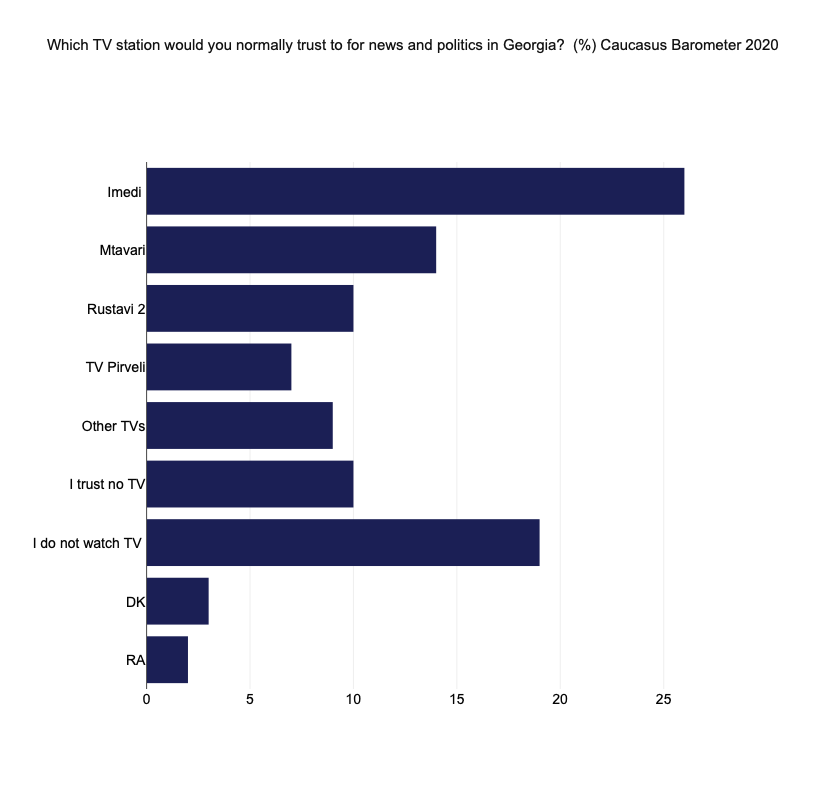
How different are people who trust different TV channels in Georgia?
The Georgian media landscape is often described as pluralistic but ‘extremely polarised’. But does the media merely reflect the prevailing political polarisation or cause it?
The majority of sizeable TV channels in Georgia are politically biased. At the same time, for seven in ten Georgians, TV remains the main source of information.
While this is a classic chicken and egg problem, arguably, causation flows both ways. Nonetheless, it has been documented that partisan media can polarise consumers and radicalise partisan voters.
The Georgian media landscape is often described as pluralistic but ‘<a href="https://transparency.ge/en/post/georgian-media-environment-2016-2020" target="_blank"...
